THE ONE VEGETABLE YOU MUST GROW THIS YEAR
I know that a lot of gardeners don't necessarily care to get into vegetable gardening. I know that because until about seven years ago, I was one of them. And while I think that vegetable gardening can be one of the most satisfying things a human being can do, I also get that it's not for everyone so I won't tell you that you MUST grow vegetables.
But there is one veggie that I think every single person should grow. It's nutritious, tastes so much better than what you can buy in the store, will definitely save you money, can be grown regardless of where you garden and it's no diva when it comes to growing. It's hard to screw this one up.
It's lettuce.
I cannot think of anything that is easier to grow.
Here's what you need to do to grow lettuce. Find a partly sunny spot; lettuce doesn't love heat, so it grows best early in the season and again late in the season. It can be in your garden amongst your flowers, in a whiskey barrel or in any wide container you have. It has short roots so you don't need a deep container.
If you're planting in a garden prepare the soil by making it loose and fluffy. Maybe throw in a little compost, but don't stress because lettuce is not a heavy feeder. If you're growing in a container, throw in an organic potting mix with nice drainage. Avoid potting soils that already have a chemical fertilizer or water retention methods included because the point is to eat this and you don't want to be eating that stuff.
Once the soil is prepare, moisten it. It's helpful to make the soil plenty moist before you sow seeds because lettuce seeds are tiny and light and will be washed away by the hose or even a watering can.
If you like things neat, make a couple rows. Don't stress about how far apart they are: 6 to 8 inches is fine. If you just want a patch of lettuce (my preference) you can skip straight to sowing the seeds. Take a small amount of cut-and-come-again lettuce seeds (I like to buy the pre-mixed mesclun-type combinations), and sprinkle them in your rows or all over your pot or patch, aiming to get them about a half-inch apart.
Then take a handful of soil and sort of sift it through your hands to put the thinnest covering of soil over the seeds, maybe an 1/8th of an inch thick. Then lightly press on top to make sure the seeds have good contact with the soil. Then, if you have one, take a little spray bottle with some water and just moisten the surface.
Keep the soil moist but avoid flooding it and in about a week the seeds will have germinated. Wait until the leaves are about 4 to 5 inches tall, and trim them low with a scissors and enjoy your delicious salad. Keep them watered and they will regrow and soon you will have more delicious lettuce to grow.
Don't love salad? Fine, put some fresh leaves on your sandwich, or use them as a garnish. But try them, because even if you think you don't like lettuce, you may be surprised that you love this.
That is it. That's easier than placing your coffee order at Starbucks.
So, will you be growing lettuce this year?
But there is one veggie that I think every single person should grow. It's nutritious, tastes so much better than what you can buy in the store, will definitely save you money, can be grown regardless of where you garden and it's no diva when it comes to growing. It's hard to screw this one up.
It's lettuce.
I cannot think of anything that is easier to grow.
Here's what you need to do to grow lettuce. Find a partly sunny spot; lettuce doesn't love heat, so it grows best early in the season and again late in the season. It can be in your garden amongst your flowers, in a whiskey barrel or in any wide container you have. It has short roots so you don't need a deep container.
If you're planting in a garden prepare the soil by making it loose and fluffy. Maybe throw in a little compost, but don't stress because lettuce is not a heavy feeder. If you're growing in a container, throw in an organic potting mix with nice drainage. Avoid potting soils that already have a chemical fertilizer or water retention methods included because the point is to eat this and you don't want to be eating that stuff.
 |
| Lettuce growing in close little rows, top. The bottom photo is actually of beet seedlings which I also think you should grow, but they aren't quite as easy as lettuce. |
Once the soil is prepare, moisten it. It's helpful to make the soil plenty moist before you sow seeds because lettuce seeds are tiny and light and will be washed away by the hose or even a watering can.
If you like things neat, make a couple rows. Don't stress about how far apart they are: 6 to 8 inches is fine. If you just want a patch of lettuce (my preference) you can skip straight to sowing the seeds. Take a small amount of cut-and-come-again lettuce seeds (I like to buy the pre-mixed mesclun-type combinations), and sprinkle them in your rows or all over your pot or patch, aiming to get them about a half-inch apart.
Then take a handful of soil and sort of sift it through your hands to put the thinnest covering of soil over the seeds, maybe an 1/8th of an inch thick. Then lightly press on top to make sure the seeds have good contact with the soil. Then, if you have one, take a little spray bottle with some water and just moisten the surface.
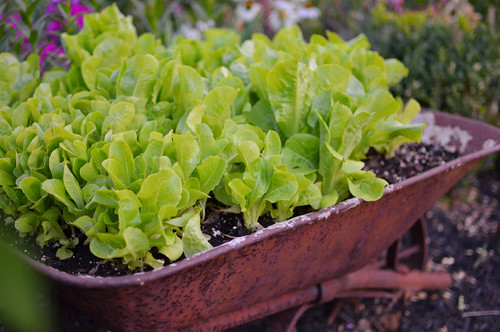 |
| Lettuce in an old wheelbarrow. Hershey photographers photo |
Keep the soil moist but avoid flooding it and in about a week the seeds will have germinated. Wait until the leaves are about 4 to 5 inches tall, and trim them low with a scissors and enjoy your delicious salad. Keep them watered and they will regrow and soon you will have more delicious lettuce to grow.
Don't love salad? Fine, put some fresh leaves on your sandwich, or use them as a garnish. But try them, because even if you think you don't like lettuce, you may be surprised that you love this.
So, will you be growing lettuce this year?
Labels: lettuce, vegetables
posted by Erin @ The Impatient Gardener at
12:17 PM
6 Comments


