Gardening and DIY tips and inspiration for the real world.
24 October 2017
PLANS FOR NEXT YEAR: A SHRUB BORDER
I tend to go on a bit here about taking stock of your garden so you can make changes next year, but that's because I still think it's one of the single best things you can do. Plus, I find it to be a very optimistic activity. In the middle of a season of decomposition, I find it quite enjoyable to think about what comes next.
This is the fall view of the wooded area. The ferns have all died back, and the Viburnum 'Mariesii' is starting to change color on the left. I'd like to make the entire edge where the woods meets the grass an informal shrub border.
Many garden designers advise that you should start your design process inside, and I agree. Make what you see when you are in your house looking out the best it can be from that view. Beyond our kitchen, the next place I spend the most time looking out the window is, believe it or not, our upstairs bathroom. Because we live in a fairly secluded area with neighbors that aren't too close (and have lost any cares we might have about it anyway) we enjoy the view out the bathroom window from the glass shower as well as when I'm standing there drying my hair and getting ready in the morning. So it's an important view, even if it's probably the last place you get to if you are strolling through the yard.
Big strides have been made in this area over the years, but it's a slow process. The area that abuts the wooded area is most in need. We love the woods and the ostrich ferns that take over, but the edges of this area get taken over by jewelweed, which is not a plant I care for.
Viburnum plicatum 'Mariesii' has been allowed to grow into a large, free-ranging shrub. It's putting on nice fall color now.
A few years ago (maybe four), I planted Viburnum plicatum 'Mariesii' on the edge of this area. It's a lovely shrub that can get quite large—10x10 or so—and I wanted to make sure it had all the room it would need or want. I recall thinking at the time I planted it that I could also add other shrubs in the area. For some reason I never acted on that idea.
After a lot of studying of that area (like, every morning), I've doubled down on that plan. There are a lot of fabulous older shrubs that I don't have the space to grow elsewhere, but a shrub border along the woods would be the perfect location for these. Don't get me wrong, I love so many of the new cultivars available now, many of which are more compact than the species and they fit in well in much of my garden, but there is a certain statement that can be made by a large specimen.
At the far end of the wood's edge we planted a Cercis canadensis (Redbud) 'Forest Pansy' last year. It struggled a little this summer, but its leaves are so beautiful.
I don't have any shrubs in particular in mind and that is exciting to me. I can't wait to get stuck in researching shrubs in winter to design this area. Shrubs are not inexpensive, so it's probably something I'll install over the course of several year, and pick up things as I find them, or even better, as I find them on sale. And I hope to be able to incorporate a few somewhat unusual shrubs to keep it interesting and to satisfy the needs of my suppressed plant collector.
I used to find super cute clothes on vacation in some place with tropical weather, and I'd bring them home and try to wear them and it was a disaster every time. After I had a closet full of skirts with loud prints, impractical tank tops and at least one hat made from palm fronds, I can to the realization that you have to be careful what you buy on vacation. Of course a flowy skirt with a toucan on it makes perfect sense when you're somewhere with 90% humidity, trade winds and you haven't worn shoes for a week, but it doesn't translate well to a Wisconsin winter.
I think the same caution needs to be applied to gardens. As you know, I'm a huge advocate of getting into as many gardens as you can as there's no better way to be inspired or learn, but I think it's important to know that it's rare that a garden you see elsewhere could be picked up and moved to your yard and work. Obviously there are climate issues to be considered, but even if that's not an issue, rarely will an exact replica work.
That's why I think it's helpful to find little pieces of a garden, a moment here or there, to draw inspiration from, rather than the garden in it's entirety.
It's something I need to remind myself frequently when I'm on Mackinac Island. The place is so flush with color and gardens everywhere you turn that it's hard not to want to turn your whole garden into one straight out of Mackinac Island. Instead, I'm sharing a few of the bits of inspiration I've picked up there over the years.
1. THINK IN COLOR
A colorful corner at the Hotel Iroquois.
The long border in front of the Grand Hotel.
You'd be hard pressed to find a garden on Mackinac that could be described as subdued. Most are riots of color. This is usually delivered through annuals and for good reason: They provide color all season long and since Mackinac Island is a seasonal destination (almost all businesses are closed in winter), there's no need to worry about winter interest in most gardens.
The gardens at the Hotel Iroquois prove that you need not worry about how you mix colors because if you put enough of them in, it all works!
My skinny patio border.
The skinny patio bed at my house is certainly planted in this vein and that's probably not a coincidence, although I doubt it was a conscious decision. I think it works in that small bed and provides a much-needed jolt of color against our all-white house.
2. CHANGE UP THE HEIGHT
Dry stacked walls on the entrance to the Hotel Iroquois add texture, raise plants and create so many more planting opportunities.
One of the best features of the entrance garden at the Hotel Iroquois, in my opinion, is the terraced levels, which offer the ability to see so many more plants at a glance. This garden would not be nearly as interesting if it were all flat.
3. USE HEDGES TO DEFINE SPACES
These hedges, which form a river of annuals, always intrigue me. I think the one on the right is there to hide the bottom of the building and the one on the left is to keep people from cutting the corner onto the walkway. The "river" of annuals down the middle makes you want to explore more.
On the lake side of the hotel, hedges help define the patio areas, but the color keeps flowing with annuals planted in front of them. This keeps the area from looking too formal as well tying it in with the rest of the garden. Every year I wonder where I could use this lesson in my garden.
4. DRAW GUESTS TO THE FRONT DOOR
Front walkways, almost without exception, are lined with plants on Mackinac Island. There is no doubt how you get to the door, but guests seem to be invited to take their time getting there as they enjoy the plantings. I'm not suggesting that all walkways will benefit from this treatment, but marking the entrance in some way, perhaps with just a pair of pots, is a great takeaway.
5. PAY ATTENTION TO WHAT'S UNDER YOUR FEET
Don't underestimate the importance of hardscaping. As gardeners we're inclined to worry more about the plant bits, but hardscaping sets the tone, guides people through a space and keeps you on even footing ... literally.
When I was on Mackinac Island a few weeks ago I snuck out early in the morning to grab a quick video of the gardens at the Hotel Iroquois. You can check it out here or below.
I grow an apple tree smack dab in the middle of the main part the garden, in one of the most noticeable places. It's on one of the very dwarf root stocks so it won't get huge and it has a somewhat wonky shape, as I think is somewhat common in apples.
Apple blossoms are the prettiest.
Almost every person who has seen my garden has commented on it, and often not in a good way.
"Oh. An apple tree! Right there!"
"Is that really an apple tree?"
"Are you planning to move that apple tree?"
I know. It's sort of weird. We're used to seeing apple trees growing in a segregated area with other fruit trees or on the periphery of an ornamental garden. It's unusual to have one planted as a focal point.
I'll tell you why I put that tree where I did:
I was a nice sunny spot. Honestly, it was a practical decision.
I needed some height in that spot but I wanted something airy that wouldn't create a wall.
I think it's beautiful both in flower and when it's fruiting.
And most of all ...
BECAUSE IT'S MY GARDEN.
The apple tree in full bloom and glaring morning sun.
I've learned so much about gardening since I first stuck my shovel in the ground here 15 years ago, but I've also learned a little something about human psychology: Everyone will not love every garden. No matter what I've done in my garden, someone (usually a neighbor because not lot of other people see it) will make one of those comments. You know the ones: They all sound nice, and many of them are, but some have that little twist to them. Or they use the word "interesting" which rarely means interesting.
A few of last year's apples.
That used to bother me. I used start questioning what I was doing. You know what I do now? Nothing. I don't care.
This revelation probably came as much through my experience as a gardener as it did through life experience (aka getting older) and gaining more confidence in general, but I realized a few years ago that I don't care what anyone else thinks about my garden. That's not to say that I'm not interested in other people's opinions, particularly those of other gardeners, but they don't unilaterally determine what will happen in my garden as they might have a few years ago. I've written about how having my friend Linda and her husband Mark stop by for a quick tour was one of the best things I've done for my garden because it allowed me to see my garden through different eyes.
The apple tree is in full bloom right now, and I dare you to show me a tree with blossoms as pretty as apple blossoms, particularly when they are right in your face. When the blooms fade, shiny green foliage will be the star (along with the clematis I grow up the tree), and then hopefully apples will dot the branches. To me, it really has all season appeal.
You might not think so. You might not ever aspire to have an apple tree in the middle of your garden. That's OK. It's your garden.
Although it was a major topic in fall, I've not said much about the circle garden lately. To catch you up to speed here's the deal with the circle garden, which is not at all a circle, but "oval garden" is not the least bit catchy. When we bought our house it was a derelict vegetable garden that was mostly weeds with a few random shrubs thrown in. I dug it up, put in a poorly designed garden and as my love for it waned, it got worse each year. It lacked focus and was trying too hard to be all things in a very small garden.
It was a visit from my garden blog friend Linda from Each Little World that spurred me to action. She mentioned that she noticed that at the time she visited (early July) there were many shades of green in my garden, but not a lot of other colors. And she was right. So I worked to come up with a way to really have a blow out of color that was still structured.
The oval garden is a departure from the rest of my garden. Now redesigned with straight paths in an X pattern, it is far more formal in a structural sense than any other place in the garden. It is divided from other gardens by floating in the lawn near the front door, but it can't feel like a foreign place.
So the goal in designing this garden was to be a departure from the rest of the yard while not looking out of place. That's a tall order. And the only way to do that was by having a combination of informal plants in the confines of a formal design. Like all gardens, I fully expect this garden to be a work in progress and I think this first year will be largely experimental. I'm sure there will be things that work better than others. Perhaps the whole concept will be a flop. But hopefully it will be a riotous entry to the yard.
Four paths (created laboriously by me in fall) lead to a center circle and create four sections. Each section will have a small boxwood ball in the center and have three segments that radiate out from it. Each segment will be planted with a single plant. Deciding what should go in each segment was a bit like a Sudoku puzzle. I wanted each section to have a seasonal flowering aspect (such as a flowering perennial or shrub), a foliage element for texture and a flowering annual that should bloom all summer. I wanted a combination of warm and cool colors and I wanted some serious play on texture. And each segment had to play well with the segment next to it and across from it to balance the garden. Complicating the matter is the fact that although this is a smaller garden—about 30 feet long—because of the large trees that line our driveway, part of it is part sun to part shade and the other part is full sun.
There is a budget for this project. Not a specific budget, but I can't run out and buy all new plants just for this. So some of the plants need to be divisions from elsewhere in the garden or grown from seed to make it reasonable.
So here's what I came up with. What you don't see in the diagram is the chive hedge, saved from the previous design of this garden. Each segment will be "outlined" in chives. Although there is no repetition in the plants save for the uniting ties of the boxwood balls and the chive hedges, I'm hoping repetition will come in the form of texture and color rather than actual plants.
Moving clockwise, starting at 12 o'clock, here's what will be in each segment:
'Bobo' hydrangea: I've been hoping to work this diminutive hydrangea into my garden for a few years and I think this is the perfect opportunity. Its fluffy flowers will contrast well with the rest of the plants plants for this segment.
Hakenochloa 'All Gold': This is certainly one of my favorite plants and I'm happy that it likes my yard. When I redesigned the back/side yard a few years ago I used 'All Gold' divisions from another garden there. Now those division have grown enough that I can divide them to fill this bit for free.
Dahlia 'HS Flame': I'm a sucker for dahlias with dark foliage and I love the simplicity of a single flower. I chose this one to balance out the pinks from the bottom of the garden. It's also a short dahlia so I shouldn't have to worry about staking it.
Lady's mantle (Alchemilla mollis): This is probably my No. 1 go-to plant in my garden because it so good both as a foliage plant and as a long-bloomer with chartreuse flowers. It also divides easily so I'll have no problem finding plants for this section.
Verbena bonareinsis 'Meteor Shower': I grew this for the first time last year and I'm head over heels in love with it. It grown much shorter than your usual verbena—more like 2 feet instead of 4 or 5 feet—and blooms absolutely nonstop.
Rhubarb: I relocated two rhubarb plants from the old garden and I hope to get several more crowns from my grandmother's garden. I love it for its huge leaves but obviously also for eating. It will take a bit to establish this section so I don't anticipate this part looking great this year.
A white annual: I've shown a low-growing nicotiana here, but I may use a Profusion zinnia or something else.
Dahlia 'Serkan': This is another low grower so I hope to not have to stake it. I love the waterlily-type dahlias and I think the relatively simple form of this flower will contrast well with the multi-petaled rose in the segment next to it.
Egyptian walking onion: I think this plant is one of the most interesting forms there is. I dug out and potted up several of them from the garden last fall and I'm hoping they'll overwinter well. This is a rather experimental choice, but if it works, I think it could be stunning.
Signet marigold 'Lemon Gem': This is one of my must-have flowers that I grow from seed. It blooms like crazy, smells delicious and has the most lovely small textured leaves and flowers. The flowers are edible as well.
Other plants that will play a role in the garden are the two clematis in the center circle—'Venosa Violacea', planted last year and 'Avant Garde', which I randomly ordered Sunday morning after seeing a photo of it. Around the outside of the inner circle, I'm envisioning a ring of lime thyme, which is a lovely groundcover that looks better than it tastes, in my experience. And then I'd need a more upright but still low annual inside of that to hide the ankles of the clematis. Of course, the chives (upper right corner) are a factor and I think I'll probably go with 'Green Gem' boxwood for the centers of each section.
You can tell that it's fall and people are starting to move inside because there's been some great stuff on the Internet this week. Before I dig in, a quick programming note: I mentioned bulb augers (that's an affiliate link) the other day and I realized, while in the throes of mass planting the other night, that a little bit of instruction can help, and probably save your wrist. I'm hoping to get a post about that up later today or tomorrow, so check back for that.
OK, let's get into some Internet goodies.
The design of Linda and Mark's garden is largely dependent on an amazing web of paths, all very much designed in a specific manner. Their planning paid off so well. Each Little World photo
This kind of thing comes easy to some people, but it's the sort of step-by-step that I need. Right after reading this, I ordered a tray for the coffee table.
I hate pumpkin pie (yes, Stephen, I'm one of those people). But because I trust Stephen in all things Thanksgiving, I may give this Not Barfy Pumpkin Pie a shot.
It's gotten chilly here and the wind has kicked up so leaves are falling like crazy. My weekend will certainly include some quality time with leaves, but also all the other fall garden-related tasks that I need to keep plodding away on. We still haven't had a frost, so I've not been able to dig dahlia tubers yet, but that is hanging out there as a big project on the horizon. What's on your agenda this weekend?
I didn't have much time to work in the yard last weekend, which is sad indeed. It has been raining here for days and days and there were other projects that took precedence (which you're about to hear about).
The few hours that I did have for garden time were dedicated to working on the oval circle garden update. Mr. Much More Patient and I spend almost two hours laying out the whole plan. Since it's meant to be symmetrical, being precise was important. But precision in an oval is difficult, especially when the original oval wasn't perfectly precise.
You can see the layout for one of the paths marked by yellow paint. It continues across the center of the garden.
We spent hours with a tape measure, stake and landscape marking paint drawing lines and dots, to the point where we forget which dot was which. (Not to self, always have at least two colors of landscape paint for these projects).
We got it all laid out and later I came back to start moving things around. The first step was heeling in all the chives from the areas that will be changed. For the most part, the outer rim of chives can stay where it is, but those along the paths had to be moved. Since I knew where the new paths are going to be, I forked over a segment between them, doing my best to root out any weeds and then just heeled in chives from other areas. The soil in that segment of the garden, which was originally used for tomatoes, is so lovely to work in, it really wasn't difficult to do. Then I started popping out the cobblestones on the inner ring of each segment.
Chives moved and new paths marked. Good thing we also marked the grass or the lines would have been lost when I dug out the chives.
I'll be widening the paths from the existing 16 inches to a much more realistic 24 inches, so there's a fair amount of moving to be done.
As I took out some cobblestones I came across the dreaded landscape fabric. Yep, I put that nasty stuff down under the pea gravel paths and that was all well and good until weeds started growing in the paths a few years later. I'm wondering now if that fabric will make pulling up the pea gravel easier or more aggravating. I'll find out soon enough.
A funny little garden full of tufts of chives.
Still lots of cobblestones to move and then that nasty pea gravel to deal with. As usual this project is progressing a snail's pace, but there's nothing to be done but keep on plugging away.
Have you seen Loi's fabulous Limelight hedge? I can't believe it's only three years old. (Stephen, if you're reading this I'm sure you knew I'd put this in today! :) )
This lesson on lawn shape is one I completely agree on and learned for myself a few years ago (which you can read about here and here).
I'll have to address this on the blog, but once again I am growing a giant zucchini plant that is producing very little in the way of actual zucchinis. Have you ever heard of such a thing? If I do get some (or find a friend with too many), I'm going to make this.
I wanted to give you a sneak peek of what's coming up on the blog soon. We have two interesting design related projects that I'm going to be looking for you to weigh in on.
The first is something I'm really excited about. A friend in Maine is moving to a new house with a huge yard that it currently almost all grass. She's an avid gardener who is not afraid of or unaccustomed to putting in time in a garden, but the slate is so blank she's looking for some insight into what she should do in this yard.
This isn't a great Google photo but you get the idea of what I mean when I say "blank slate."
Once we get a drawing pulled together we'll lay out some desires and requirements and then we're going to ask you, dear readers, to tell us what you'd do if this were your yard.
This is a photo of the circle garden from a couple years ago taken early in the season. It's now in shambles, overgrown and poorly designed. I'm ready for a change.
As I mentioned a few weeks ago, I think my circle garden is due for a refresher, which means I'm going to clear it out in fall in preparation for spring planting. That means that I'll have to make some decisions about what I'll be keeping and what will stay or move elsewhere, and since I'm feeling a little scatterbrained about it, I'm going to throw some options out here and see what you all think.
So that's what's coming up soon and that's it for this week, folks. I have some sailing and gardening on the agenda. You know ... summer stuff. May it continue for many weeks to come.
I'm sorry the posting has been a bit sporadic lately. Although a deadline a work certainly has much to do with that, I've also been spending some blog time working on a redesign. It's almost finished and I hope to launch it soon so don't be alarmed if you visit The Impatient Gardener soon and it looks different. Same blog, same gardener, different look.
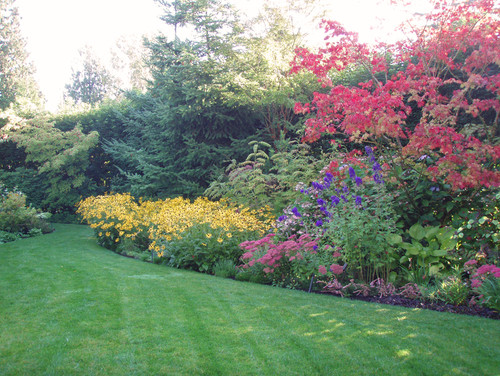
I've been staying up late at night watching all the BBC gardening shows I can find on youtube, and one was on herbaceous borders. The examples they showed were stunning, although I detest such borders when they have a bowling alley of grass down the middle. Anyway, it got me thinking, and I believe that a mixed border is my favorite kind of garden.
Tracy diSabato-Aust has several wonderful books and one of my favorite is The Well-Designed Mixed Garden. In particular, I love the mix of textures in mixed garden, especially when a few evergreens are mixed in. Even just seeing the trunk of a tree does something really interesting for a mixed garden.
So that's what this week's Feature Friday is about.
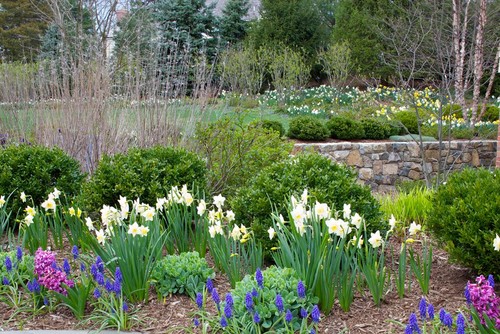
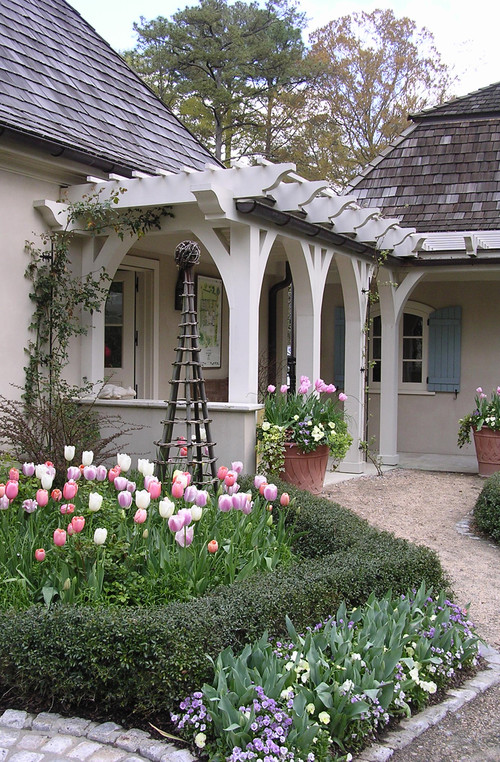
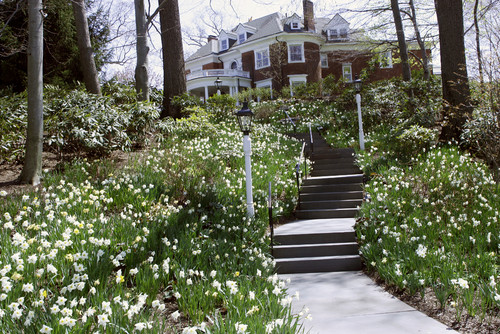
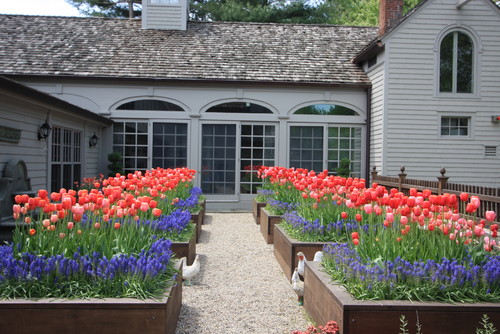
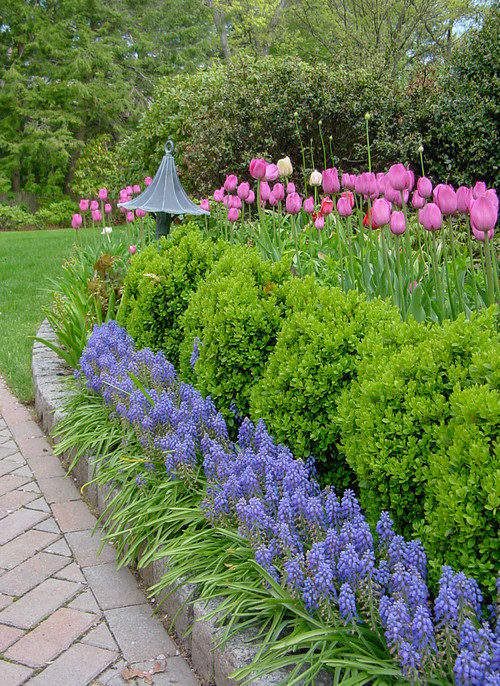
The declaration in the headline might be more optimistic than realistic, but I thought it would be appropriate to mark the first full day of spring with some shots of spring bulbs in full bloom, even it will be several weeks before such a thing happens in my area.
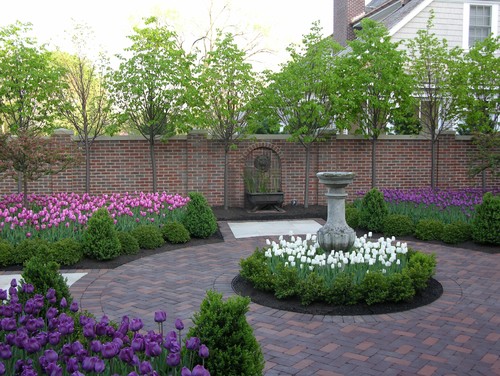
When I did the garden design styles series, one reader had a comment that had me laughing so hard and I've not forgotten it. Now every time I see a photo of a garden with a boxwood hedge I think of it.
Casa Mariposa said, "I don't like structured, formal gardens and little boxwood hedges drive me nuts. I just want to take a pair of shears to the side and cut an escape route for all the plants penned up inside." The image of cutting an escape route for the plants stuck in boxwood jail (such as the tulips below) brings a smile to my face every time.
Looking at these photos, I'm a bit sad that I don't grow more tulips, but it seems like a worthless cause when every critter around seems to line up to eat them.
I've discovered some of the fancier kinds of daffodils and that helps me forgot that I'm missing tulips. I love the doubles and many of them have a lovely fragrance too.
The Impatient Gardener photo
Every spring I tell myself that I'm going to plant more spring bulbs come fall and then every fall I decide that I have too many other chores to do in the garden so I skip it. The only negative about spring bulbs as far as I'm concerned is having to deal with the foliage after the flowers have faded. The more daffodils I have, the more braiding of leaves I have to do and that gets tiresome. Still I doubt that few things can stir a gardener's soul more than the springs first flowers.
What are your favorite spring bulbs?
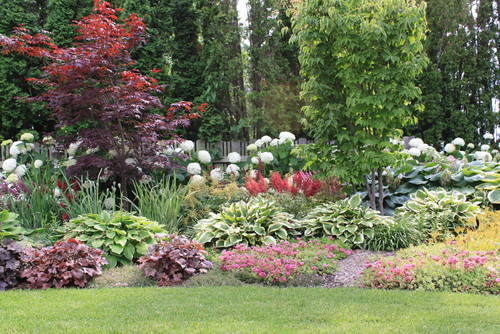
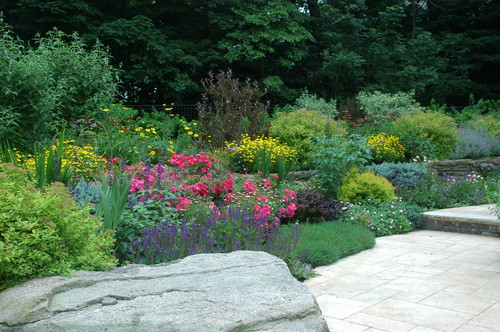
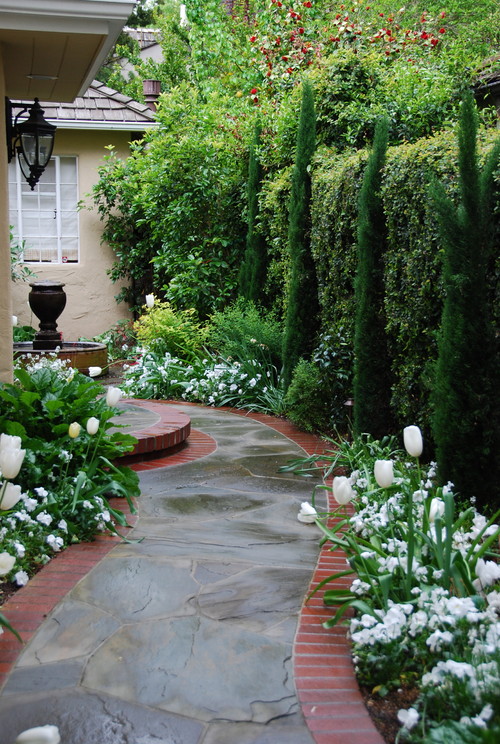
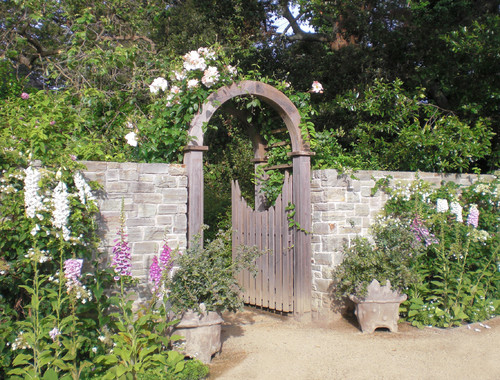
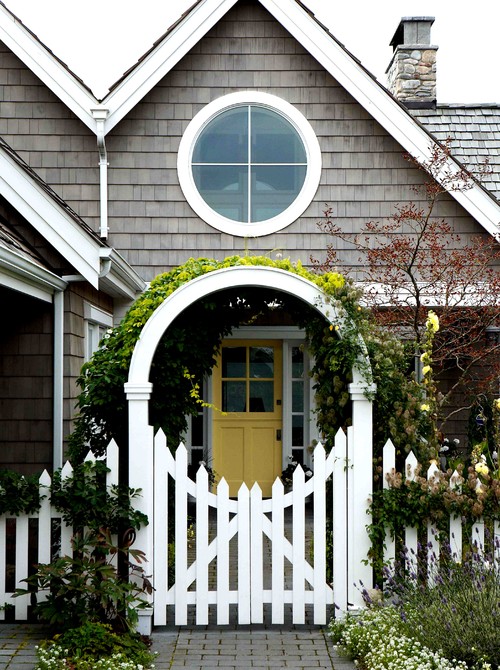
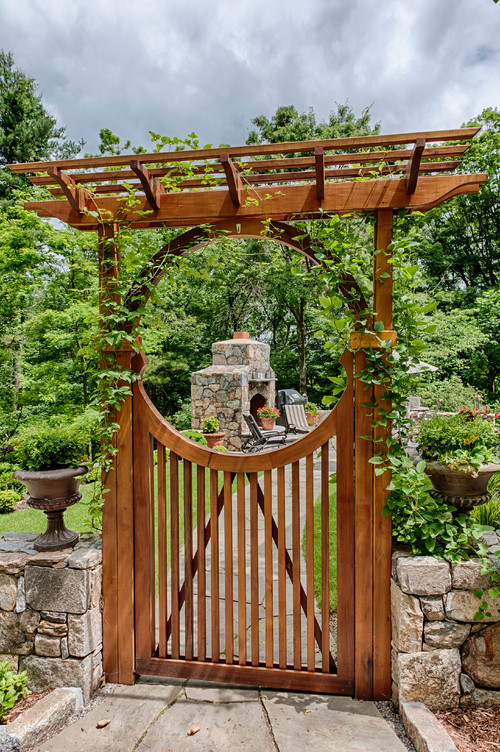
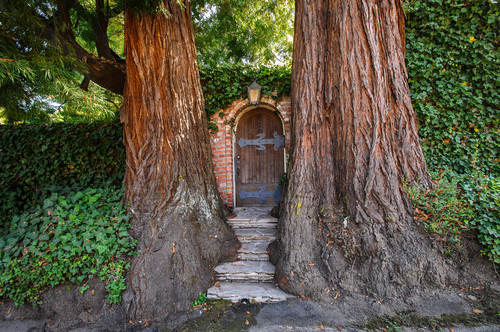
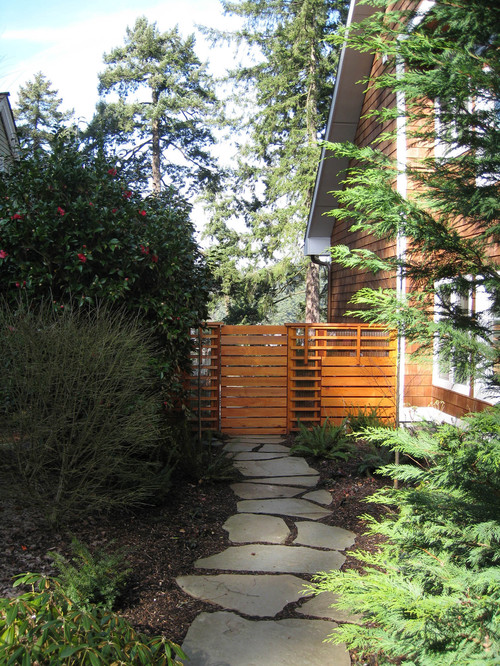
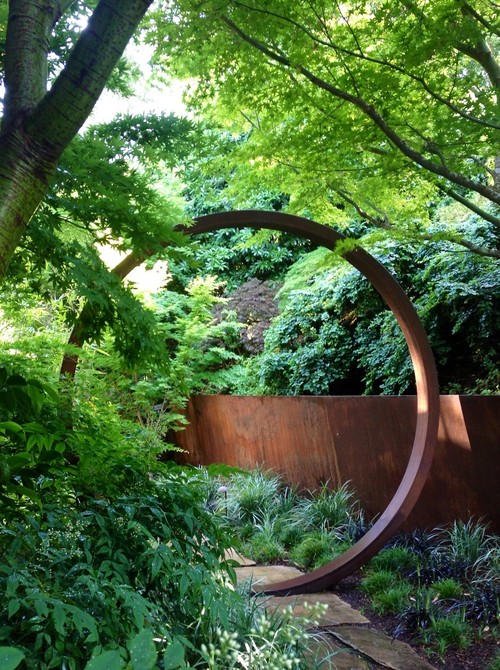
All photos from Houzz.com. Click on the photo for more information.
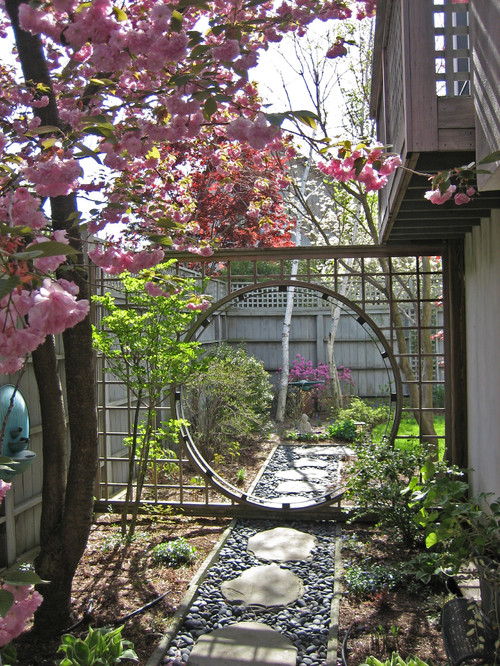
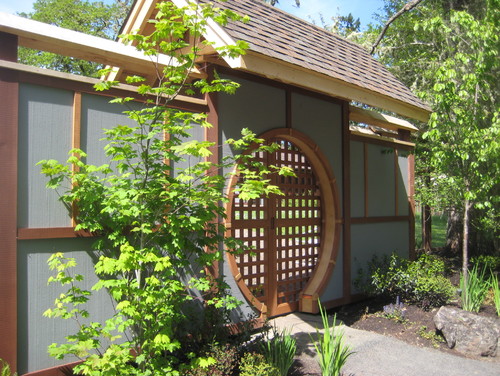
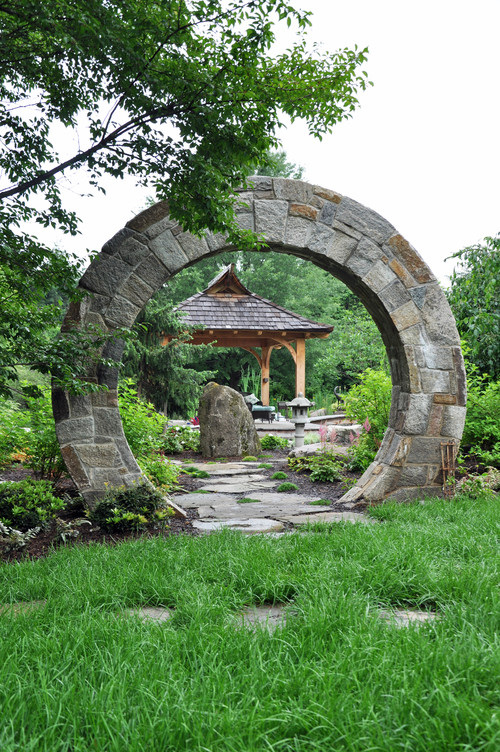
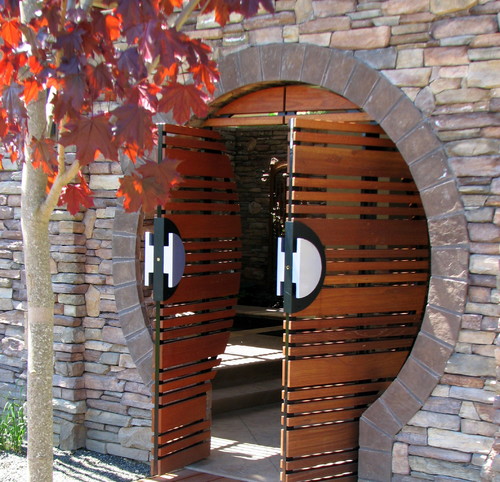
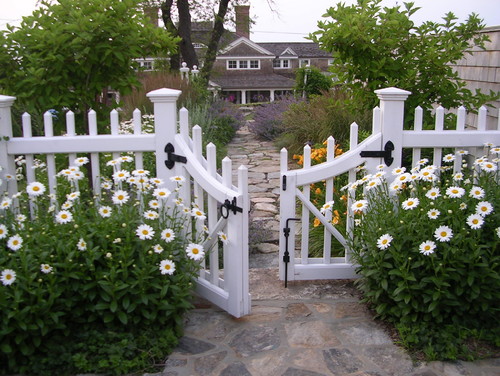
I love gates in gardens. The sense of enclosure that they bring is so charming. I love gates that give you just a peek of what lies beyond or ones that frame a view perfectly.
Location: Southeast Wisconsin (zone 5), United States
Welcome to the Impatient Gardener. I'm Erin and the title about says it all. I'm always striving for ways to get Mother Nature to hurry up in my Wisconsin zone 5 garden, yet I know sometimes it's best to sit back and just enjoy the ride. In my real life I'm an editor of a magazine, an avid racing sailor and the owner of two very large Newfoundland dogs who I love to work with. All of which means, like many people, I garden when I can. And just because there's not enough time in the day, that doesn't mean I'm not constantly taking on new gardening projects. Call it HGTV Syndrome: The belief that anything can get accomplished in 30 minutes or less. It can't, of course, but it sure is fun trying.